What Love Taught Me 🏳️‍🌈

gay-author-felix-kurt-blog-What-Love-Taught-Me

What Love Taught Me 🏳️‍🌈

Hey Booklovers!

Let’s talk about love. Not just the swoon-worthy kind we read about in books (though I’m all for that too!), but real, messy, beautiful, heartbreaking, hopeful love. As a gay man and a writer of LGBTQ+ fiction, love and relationships are at the heart of everything I create—but they’ve also been central to my own personal journey.

So today, I want to share some insights I’ve gathered through navigating love, heartbreak, and everything in between. Because even though I’m not currently in a relationship, I still believe in true love. I believe in soulmates. And I believe our stories—especially queer stories—deserve to be told authentically.

What Has Being Gay Taught Me About Love and Relationships?

Growing up, I didn’t have role models for queer love. There were no love stories that reflected my truth—no fairytales with two princes, no rom-coms with boys falling for boys. So I had to figure it out on my own.

And let me tell you: figuring out how to love when you’ve spent years being told that your love is “less than” is not easy. It takes time. It takes healing. It takes learning to believe you’re worthy of being loved exactly as you are.

Being gay has taught me that love, especially queer love, is radical. It’s brave. It’s powerful. And it’s ours.

Why Am I Still a Believer in Soulmates, Even Though I’m Single?

I may not be in a relationship right now, but that doesn’t mean I’ve given up on love. If anything, being single has made me reflect more deeply on the kind of love I want, and the kind I’m ready to give.

I believe in that deep, unshakable connection with someone who just gets you. Someone you don’t have to explain yourself to. I believe in real love, the kind that grows slowly and sticks around when things get hard. The kind you find once in a lifetime. And when I write love stories, that belief is what drives them.

Because even if I haven’t found “the one” yet, I know he’s out there somewhere, maybe lost in a bookstore aisle like me, looking for the same kind of magic.

How Do My Real-Life Experiences Shape the Queer Love Stories I Write?

As a gay male author, creating queer characters isn’t just something I do, it’s something I live. The emotions, the fears, the joy, the longing—it all comes from a real place. When I write about a first kiss, a breakup, a slow-burn romance, I’m not just imagining it. I’m remembering, reliving, and reshaping moments from my own life.

My experiences with love, both the highs and the heartbreaks, make my writing more personal, more honest. And hopefully, more relatable.

I don’t just write about queer love because I can. I write it because I have to. Because we deserve stories that are just as tender, just as dramatic, just as soul-stirring as any straight love story.

What Have I Learned About Love So Far?

Love doesn’t always look the way you expect it to.
And that’s okay. Sometimes it surprises you. Sometimes it teaches you something first.

Being single isn’t being incomplete.
It’s a chapter. A space to grow. And honestly? A great place to fall in love with yourself.

Communication is everything.
Whether it’s a short fling or a long-term relationship, being honest about what you feel (and need) changes everything.

You don’t have to settle.
This one took me a while. But now I know: real love isn’t about accepting less, it’s about waiting for more.

Why Do We Need More Queer Love Stories?

Because the world still needs to see them. Because young LGBTQ+ readers need to believe their love stories matter. Because older readers (like me) still crave the magic we never got growing up.

Queer love stories—like queer lives—are valid, vibrant, and full of hope. Whether they end in happily ever after or a lesson learned, they’re powerful. And I’ll keep writing them for as long as I can.

Whether you’re in a relationship, single, healing, searching, or just loving the journey—your story matters. And if you’re still waiting for your soulmate, like me, just know: love has no deadline.

My newsletter subscribers get instant access to my Secret VIP Giveaway Page, where I share free short stories and exclusive insights into my current projects. Sign up HERE

Stay bookish and fabulous,

Felix
Continue Reading

Important LGBTQ trailblazers

gay-author-felix-kurt-blog-trailblazers

Important LGBTQ trailblazers

Hey Booklovers!

Today, I want to talk about some of the incredible LGBTQ trailblazers who paved the way for all of us. As someone who came of age in the 1990s, I can tell you that representation was almost nonexistent back then. Queer characters in the media were rare, and when they did appear, they were often reduced to stereotypes or tragic figures.
Being openly different in those times took guts—real guts. And yet, there were people who stood up, spoke out, and made it a little easier for the rest of us to live authentically. Let’s celebrate some of these icons and explore why they’re so important.

Who Are Some LGBTQ Trailblazers We Should Celebrate?

Here are just a few names that come to mind when I think of trailblazers who helped shape the world for queer people:
1. Marsha P. Johnson and Sylvia Rivera
These trans women of color were pivotal figures in the Stonewall Riots of 1969. Marsha and Sylvia’s activism didn’t stop there—they dedicated their lives to fighting for LGBTQ+ rights, especially for the most marginalized in our community.

2. Harvey Milk
As one of the first openly gay elected officials in the United States, Harvey Milk broke barriers in the 1970s. His courage in running for office—and winning—helped put LGBTQ+ issues on the political map.

3. Audre Lorde
A Black lesbian poet and activist, Audre Lorde’s work explored themes of identity, feminism, and social justice. Her words still inspire and empower people to this day.

4. Ellen DeGeneres
Ellen made history in 1997 when she came out as gay—both in real life and as her TV character on Ellen. At a time when coming out in Hollywood could ruin careers, she took a huge risk and changed the landscape of media representation.

5. RuPaul Charles
RuPaul didn’t just bring drag into the mainstream—he turned it into a worldwide phenomenon. RuPaul’s Drag Race has created a platform for queer artistry and empowered countless LGBTQ+ individuals to embrace their fabulousness.

6. Larry Kramer
As the founder of ACT UP, Larry Kramer was a fierce advocate for people living with HIV/AIDS during the height of the epidemic. His activism forced the world to pay attention to the crisis when too many people wanted to look away.

Why Are These Trailblazers So Important?

These trailblazers didn’t just break barriers—they showed us what was possible. When I was growing up, seeing people like Ellen or RuPaul on TV was a revelation. It said, You’re not alone.

Beyond visibility, these figures fought for real change. From legal rights to social acceptance, their work laid the foundation for the freedoms we have today—and reminded us to keep fighting for what we don’t yet have.

What Was It Like Growing Up Without Queer Representation?

Let me take you back to the 1990s. If you were queer, you were likely hiding it. If you were lucky enough to find representation, it was often a side character in a story about someone else’s struggle.
That’s why these trailblazers were so impactful. Their bravery stood out in a world that didn’t want to see us. They made it clear that being different wasn’t just okay—it was something to be proud of.

How Can We Honor LGBTQ Trailblazers Today?

1. Learn Their Stories: Take the time to read about their lives and contributions. Books, documentaries, and podcasts are great places to start.
2. Support LGBTQ+ Causes: Many of the issues they fought for—like trans rights, racial justice, and healthcare equity—are still relevant today.
3. Be Visible: Whether you’re queer or an ally, being open and vocal about your support helps continue their legacy.

Final Thoughts

LGBTQ trailblazers didn’t just open doors—they kicked them down. They made it possible for people like me to write unapologetically queer stories and for the next generation to grow up with a little more hope.
Who are the LGBTQ trailblazers that inspire you? Let me know—I’d love to hear about them!

My newsletter subscribers get instant access to my Secret VIP Giveaway Page, where I share free short stories and exclusive insights into my current projects. Sign up HERE

Stay bookish and fabulous,

Felix
Continue Reading

Let’s Create an Open, Loving and Accepting Society

Let’s Create an Open, Loving and Accepting Society

Today, I want to chat about something that’s been fueling my creative fire lately: crafting a world where love knows no bounds. Strap in, because we’re diving deep into why I write fiction and the bigger mission behind it all.

What would a world where love knows no bounds look like?

Picture this: a world where who you love isn’t a headline or a point of contention. It’s just… love. Simple as that. No labels, no judgment—just pure, unadulterated love. Sounds pretty amazing, right? Well, that’s the world I’m striving to create, one story at a time.

How can storytelling shape hearts and minds?

You see, as a fiction writer, I believe in the power of storytelling to shape hearts and minds. It’s not just about spinning a good yarn or crafting compelling characters (though I do love me some juicy plot twists and complex protagonists). It’s about weaving a tapestry of empathy, understanding, and acceptance.

What themes run through your novels?

In my novels, whether it’s a heart-pounding romance, a gripping mystery, or a fantastical adventure, there’s always one underlying theme: love in all its forms. And not just romantic love, mind you—though there’s plenty of that to go around. I’m talking about the love between friends, the love of family, the love for oneself. Because love is love, no matter how you slice it.

Why is normalizing love in all forms important in fiction?

But here’s the kicker: my stories aren’t just about showcasing love. They’re about normalizing it. In a world where LGBTQ+ rights are still up for debate and discrimination runs rampant, it’s more important than ever to shine a spotlight on love in all its beautiful, messy, glorious forms.

How does writing fiction help to promote acceptance and understanding?

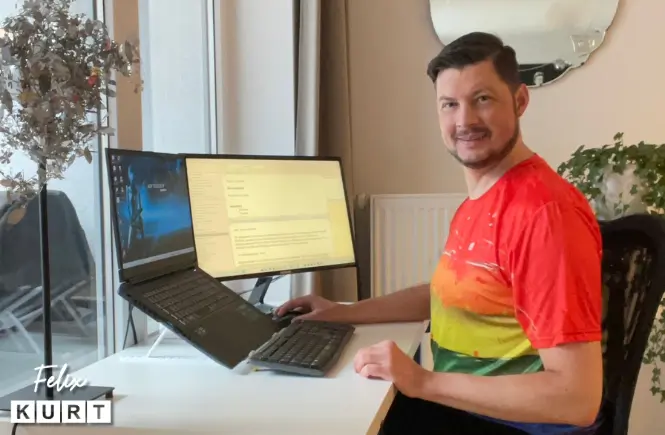
You see, every time I sit down at my laptop and let my fingers dance across the keyboard, I’m not just crafting characters and plotlines. I’m building bridges. I’m tearing down walls. I’m constructing a world where acceptance and understanding reign supreme.

What challenges do writers face when crafting stories of love and acceptance?

And you know what? It’s not always easy. There are days when the words don’t flow, when doubt creeps in, when the world outside feels dark and unyielding. But then I remember why I do what I do. I remember the impact a single story can have, the way it can touch a reader’s heart and change their perspective forever.

Why is love the greatest story ever told?

So, here’s to building a world of love—one page, one chapter, one story at a time. Because in the end, love will always be the greatest story ever told. And I’m just grateful to play a small part in sharing it with the world.

My newsletter subscribers get instant access to my Secret VIP Giveaway Page, where I share free short stories and exclusive insights into my current projects. Sign up HERE

Stay bookish and fabulous,

Felix
Continue Reading

The Power of Visibility: Sharing Personal Stories for Social Change

gay-author-felix-kurt-blog-visibility

The Power of Visibility: Sharing Personal Stories for Social Change

Hey Booklovers!

Have you ever wondered why personal stories matter so much in shaping the world? Or why some voices seem louder than others in the fight for change? As a gay male author, I’ve thought about these questions countless times, and the answer always comes back to visibility. So today, I want to share why being visible—being my authentic self—matters so much, not just to me, but to society.

Why is being visible so important?

For a long time, LGBTQ+ stories were hidden or erased altogether. I grew up feeling like I had to hide parts of myself because there weren’t enough examples of people like me living openly and thriving. That silence can feel like an endless void, but visibility has the power to fill it with color, hope, and connection.
By showing up as my authentic self in my writing and daily life, I want to send a message: You are not alone. When we share our truths, we create space for others to feel seen, heard, and valued.

How can stories spark change?

Storytelling isn’t just about entertainment; it’s about empathy. When people read about someone’s life experiences—especially those different from their own—it breaks down barriers of misunderstanding.
When I write as a gay man, I’m not just telling my story. I’m weaving in the complexities of love, identity, joy, and struggle that many people—gay or straight—can connect with. And when someone connects with my story, it has the potential to shift their perspective. That’s how change begins.

Is it scary to be authentic in a world that might judge you?

Oh, absolutely! Being authentic isn’t always easy. Some days, it feels like standing in a spotlight when you’d rather hide in the shadows. But the truth is, living authentically is a kind of quiet revolution. Every time I embrace who I am, unapologetically, I’m challenging a society that has often told me to shrink myself.
The world needs more people who are willing to be visible. Not just for their own sake, but for everyone who’s still finding their courage to do the same.

How can YOU help amplify these stories?

You don’t have to be a writer like me to make a difference. You can read, share, and celebrate stories that challenge norms and push boundaries. When you read books by LGBTQ+ authors or share content from marginalized voices, you’re helping to amplify our visibility.
So ask yourself: What stories are you supporting? Whose voices are you helping to uplift?
In the end, sharing personal stories is about more than one person’s experience—it’s about building a more compassionate, inclusive world. My journey as a gay male author is just one thread in this vibrant tapestry, but it’s one I’m proud to hold.

What’s next?

I’ll keep writing, keep showing up, and keep being visible. And I hope you’ll keep reading, keep asking questions, and keep opening your heart to the power of personal stories.

My newsletter subscribers get instant access to my Secret VIP Giveaway Page, where I share free short stories and exclusive insights into my current projects. Sign up HERE

Stay bookish and fabulous,

Felix
Continue Reading

Customized T-Shirts = Personal Protest

gay-author-felix-kurt-blog-shirts as protest

Customized T-Shirts = Personal Protest

Hey Booklovers!

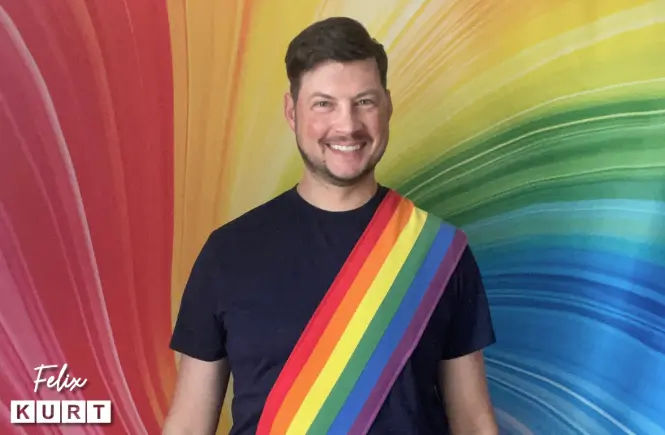
Let’s talk T-shirts! Not just any T-shirts, but the kind that say something before I even open my mouth. One of my absolute favorite creative rituals is taking basic tees and transforming them into bold, wearable statements. I’m talking patches, ribbons, fabric scraps—whatever catches my eye and sparks a little joy. These shirts might start out plain, but once I’m done with them? They’re unapologetically loud, proud, and seen.

And honestly, it’s not just about fashion. It never really has been. For me, it’s protest, play, and self-expression all rolled into one soft cotton canvas. It’s my way of showing up in the world: queer, colorful, and completely myself.

Before writing became my main creative outlet, I spent 15 years working professionally as a fashion designer. Yup, that was a whole chapter of my life—clients, fittings, deadlines, the works. I loved the craft, but not always the pressure. After switching careers, I found myself drawn back to the sewing machine, but this time on my own terms. No briefs, no expectations—just me, some thread, and a head full of ideas. Pure creative freedom. And let me tell you, it felt amazing.

Now, I design and wear pieces that feel like an extension of who I am. Think vibrant colors, playful textures, unexpected details—clothes that carry a message. The outfits you see me wear on my channels? They’re not just for show. They’re intentional. Every stitch is a statement. I want people to see me and immediately get that this is a space for colorful, queer exploration. It’s about joy, identity, and rewriting the rules of how we present ourselves to the world.

Lately, I’ve started wearing my designs beyond the camera, too. Grocery runs, brunch dates, late-night bookstore visits—you name it. And with every outfit, I feel like I’m stitching more of my story into the fabric of my everyday life.

In so many ways, these customized shirts are a lot like the characters I write. They take the scraps the world tosses their way—pain, doubt, rejection—and turn them into something beautiful. Something bold. Something that refuses to be ignored. That’s what creativity is, at its core. It doesn’t ask for permission. It doesn’t wait for perfection. It just begins. Right where you are. With what you’ve got. And it grows from there.

So, whether it’s a T-shirt, a story, or a whole new identity, start where you are. Make it yours.

😍🏳️‍🌈

My newsletter subscribers get instant access to my Secret VIP Giveaway Page, where I share free short stories and exclusive insights into my current projects. Sign up HERE

Stay bookish and fabulous,

Felix
Continue Reading

Gay Bubble: What Is It, and Does It Really Exist?

gay-author-felix-kurt-blog-the-gay-bubble

Gay Bubble: What Is It, and Does It Really Exist?

Hey Booklovers!

Let’s talk about something I’ve heard tossed around in conversations: the “gay bubble.” What is it exactly? Does it actually exist? And if it does, what are the effects—both good and bad? As a gay male author who loves exploring queer identity in my writing, this topic has been on my mind a lot lately. So, let’s break it down.

What Is the Gay Bubble?

The “gay bubble” is a term often used to describe a social environment where queer people primarily interact with other queer people. It’s like a little pocket of the world where LGBTQ+ culture is the norm—whether that’s in a physical space, like a gay neighborhood or club, or online, in queer-focused forums or apps.
For many, the bubble is a safe haven. It’s a place to express yourself freely, connect with others who share your experiences, and escape the pressures of heteronormative society. But is it always a good thing?

Does the Gay Bubble Really Exist?

Oh, it exists. As queer people, we often create spaces where we can just be—without judgment, without fear, and with plenty of glitter if that’s your thing. These bubbles can take many forms. Think about Pride events, queer-owned businesses, or even friendship groups made up entirely of LGBTQ+ folks. The internet has also made it easier to form digital gay bubbles, where we can share memes, discuss our favorite queer icons, and support each other through life’s ups and downs.
But here’s the catch: like any bubble, it’s not immune to popping.

What Are the Positive Effects of the Gay Bubble?

Let’s start with the good stuff. The gay bubble can feel like an emotional lifeline, especially if you’ve ever felt isolated or “othered” by mainstream society. Here’s why it matters:
1. Safety and Belonging
For many queer people, the bubble is a space where you can exist without constantly explaining or defending yourself. It’s a place to feel seen and understood.
2. Cultural Expression
The bubble allows LGBTQ+ culture to thrive. Drag shows, queer literature, chosen family—it’s all celebrated and amplified in these spaces.
3. Community Support
From navigating coming out to dealing with heartbreak, the gay bubble provides a network of people who “get it” in a way others might not.

Are There Downsides to the Gay Bubble?

While the bubble can be a blessing, it’s not without its challenges. Here’s where things can get tricky:
1. Exclusion of Allies
Sometimes, the bubble can feel so insular that it unintentionally pushes away allies or other groups. While it’s important to have queer-centered spaces, total exclusion might limit opportunities for broader connection and understanding.
2. Losing Perspective
Living in the bubble too long can make it easy to forget that not everyone shares the same progressive views or experiences. This can make re-engaging with the wider world feel jarring—or even frustrating.
3. Pressure to Conform
Ironically, even within the bubble, there can be unspoken rules about how to “be queer” the “right way.” Whether it’s about looks, interests, or opinions, this pressure can sometimes feel just as stifling as societal norms outside the bubble.

How Does the Gay Bubble Affect Creativity?

As a writer, I often reflect on how the gay bubble influences my work. On one hand, it’s inspiring—it’s a rich source of stories, characters, and perspectives that I draw from in my novels.

But on the other hand, I want my stories to reach beyond the bubble. While my characters are unapologetically queer, I also hope their journeys resonate with people of all backgrounds. The challenge is to celebrate queer experiences authentically while still creating a bridge for others to understand and connect with them.

Should We Step Outside the Gay Bubble?

The short answer? Yes—but on your own terms. The bubble is a beautiful, necessary space, but growth happens when we step out of our comfort zones. Whether it’s engaging with allies, advocating for LGBTQ+ rights in wider communities, or simply sharing your story with someone who’s never met an openly gay person, those moments can be transformative.

Final Thoughts

The gay bubble is real, and it’s powerful. It’s a sanctuary, a celebration, and sometimes, a bit of an echo chamber. But like any space, its strength comes from how we use it. Let’s embrace the bubble when we need it, but also remember to carry its lessons of love, acceptance, and resilience into the larger world.
What do you think? Have you experienced the gay bubble, and how has it shaped your life? I’d love to hear your thoughts!

My newsletter subscribers get instant access to my Secret VIP Giveaway Page, where I share free short stories and exclusive insights into my current projects. Sign up HERE

Stay bookish and fabulous,

Felix
Continue Reading

Finding Inspiration in Everyday Life: Experiences Inspire my Writing

gay-author-felix-kurt-blog-finding-inspiration

Finding Inspiration in Everyday Life: Experiences Inspire my Writing

Hey Booklovers!

People often ask me, “Where do you get your ideas?” And honestly, the answer isn’t as glamorous as you might think. I don’t wait for a lightning bolt of inspiration or a dream full of perfect plotlines. Most of my inspiration comes from everyday life—those tiny, magical moments that seem ordinary but are bursting with story potential.
Let me share a bit about how the world around me inspires my writing and how it makes my fiction novels feel more real.

The Power of Eavesdropping (In a Good Way!)

I’m one of those people who loves sitting in a coffee shop, not just for the caffeine but for the atmosphere. There’s something about snippets of overheard conversations—the rhythm of a stranger’s laughter, the heated debate about whether oat milk is overrated—that sparks ideas.
One time, I overheard two people discussing a surprise marriage proposal, and it sent my imagination running. What if the proposal didn’t go as planned? What if the person saying yes had a secret they hadn’t revealed yet? That one moment ended up inspiring a subplot in one of my novels.

Personal Memories and Real Emotions

As a gay male author, I draw a lot from my own life. The awkwardness of my first crush, the nervous excitement of coming out to a friend, and even the heartbreak of unrequited love—all of those moments find their way into my characters’ lives.
Why? Because those are real emotions, and readers connect with authenticity. When I write about a character falling in love or grappling with their identity, I want you to feel like you’re living that moment with them. That connection comes from writing what I’ve felt, seen, and experienced.

Observing the Beauty in the Mundane

I’ve always believed that inspiration is everywhere if you’re paying attention. The barista with the quirky tattoos? They might become a character in a future novel. The way sunlight filters through the trees on a quiet walk? That’s the setting for a pivotal scene.
Even the frustrations of daily life—like a missed bus or a rainy day—can inspire. What if a missed bus leads to a life-changing encounter? What if the rain isn’t just an inconvenience but a symbol of renewal?

The People Who Shape Us

The people we meet leave marks on us, and as a writer, I get to honor those connections by weaving them into my stories. A kind word from a stranger might inspire a mentor figure. A funny quirk from a childhood friend might breathe life into a side character. For me, it’s not about copying people exactly but capturing their essence. It’s my way of celebrating the richness of human interaction—and that’s what makes my fictional worlds feel real.

Turning Everyday Life into Fiction

When I sit down to write, I’m not just creating characters and plotlines. I’m translating the messiness, beauty, and unpredictability of life onto the page. My goal is for readers to see themselves in my stories, to feel like these characters could walk off the page and join them for coffee. That realism comes from grounding my stories in everyday inspiration. Because even in fiction, the truth of human experience is what resonates most.
So, the next time you’re out in the world, take a moment to observe the details. Who knows? That small moment might be the start of a great story.

My newsletter subscribers get instant access to my Secret VIP Giveaway Page, where I share free short stories and exclusive insights into my current projects. Sign up HERE

Stay bookish and fabulous,

Felix
Continue Reading

Embracing My Truth: The Journey to Self-Acceptance

gay-author-felix-kurt-blog-embracing-my-truth

Embracing My Truth: The Journey to Self-Acceptance

Hey Booklovers!

Today, I want to open up about something incredibly personal: my journey to self-acceptance as a gay man. It’s a story I’ve held close to my heart, but one I believe is important to share—because maybe, just maybe, it’ll resonate with someone who needs to hear it.

What Was It Like Growing Up Gay in the 1990s?

Let me paint a picture: it’s the 1990s, and being gay is not something people talked about unless it was to mock, insult, or judge. There was no TikTok, no Instagram, no visible queer community in my world. The closest I came to seeing someone “like me” on TV was a punchline in a sitcom.
In school, the word “gay” was a weapon. Kids called me “gay” long before I even knew what it meant. It wasn’t a descriptor—it was an insult, hurled with venom and cruelty. By the time I started to understand my own feelings, I had already absorbed the message loud and clear: being gay was something to be ashamed of, something disgusting.

How Did Bullying Affect My Self-Acceptance?

To say I was bullied is an understatement. My school life was a minefield of taunts, laughter behind my back, and outright exclusion. Every time someone spat the word “gay” at me, it felt like a slap. I didn’t know how to fight back, because deep down, I feared they were right. Bullying didn’t just hurt—it shaped how I saw myself. I started to believe that I was broken, that my feelings were wrong. I tried to shrink myself, to disappear, to be someone—anyone—else.
It took years to undo that damage.

When Did I Realize That Being Gay Wasn’t Wrong?

There wasn’t a single moment of revelation—it was a slow, painful process. It started when I discovered stories of people who were unapologetically themselves. Authors, musicians, activists—they became my lifeline. When I finally admitted to myself that I was gay, it wasn’t just a “coming out” moment; it was a reckoning. I had to unlearn all the lies I’d been told about what it meant to be queer.

What Helped Me Embrace My Truth?

1. Writing Saved Me
Writing became my escape, my sanctuary, and ultimately, my voice. I poured my pain, confusion, and hope into stories. It helped me process my emotions and imagine a world where being gay wasn’t something to hide.
2. Finding My People
As I got older, I found my community—people who saw me, accepted me, and celebrated me. Their love and support were the antidote to years of shame.
3. Representation Matters
When I saw queer characters in books, movies, and TV shows, it was life-changing. It made me realize that our stories deserve to be told. This is why I write LGBTQ+ fiction—to give others the representation I so desperately needed.

Why Is Visibility So Important?

Visibility is everything. It’s the difference between feeling alone and knowing you’re part of something bigger. It’s why Pride Month matters, why queer authors matter, and why sharing our stories is a revolutionary act. As a gay male author, my mission is to write stories that show the beauty, complexity, and resilience of queer lives. Because every time someone picks up a book and sees themselves in its pages, it chips away at the shame and isolation that so many of us have felt.

What’s My Message to You?

If you’re struggling to embrace your truth, know this: you are not alone. You are not broken. The world may try to convince you otherwise, but there is nothing wrong with being exactly who you are. My journey to self-acceptance was long and difficult, but it made me stronger. It taught me that there is power in living authentically. And it’s a power I want to share with the world—through my words, my stories, and my truth.

My newsletter subscribers get instant access to my Secret VIP Giveaway Page, where I share free short stories and exclusive insights into my current projects. Sign up HERE

Stay bookish and fabulous,

Felix
Continue Reading

The Importance of Pride Month

gay-author-felix-kurt-blog-pride

The Importance of Pride Month

Hey Booklovers!

June rolls around, and suddenly the streets are alive with rainbows, celebrations, and a collective reminder that we’ve come a long way—but also that the journey isn’t over. As a gay male author, Pride Month holds a special place in my heart. It’s not just a time to celebrate who we are; it’s a vital call to action, especially with the challenges facing LGBTQ+ rights worldwide.
Let’s talk about why Pride Month matters now more than ever.

What Does Pride Month Represent?

Pride Month is more than parades and parties (though those are fabulous too!). It’s a commemoration of the 1969 Stonewall Riots, a pivotal moment in LGBTQ+ history that kickstarted the modern fight for equality.
It’s a time to honor the activists who paved the way, remember the struggles we’ve faced, and celebrate how far we’ve come. But most importantly, it’s about visibility. Pride says, We’re here, we matter, and we’re not going anywhere.

Why Is Pride Still Relevant Today?

In an ideal world, we wouldn’t need Pride Month anymore. But let’s be real—the fight for acceptance and equality is far from over. With the current political situation—whether it’s anti-LGBTQ+ legislation, hate crimes, or attempts to erase queer identities from public spaces—Pride has never been more critical. It’s a reminder that we must keep showing up, speaking out, and standing together.

How Can Straight Allies Support Pride?

Pride Month isn’t just for LGBTQ+ folks—it’s also a chance for allies to show their support. Here are some ways allies can make a difference:
• Educate Yourself: Learn about LGBTQ+ history, rights, and the issues facing the community today.
• Be Vocal: Use your voice to challenge discrimination, whether it’s in your workplace, friend group, or online.
• Celebrate Queer Joy: Pride is a time to uplift and amplify LGBTQ+ voices, from art and literature to music and activism.

Straight allies are a crucial part of creating a world where acceptance isn’t just an ideal but a reality.

What Does Pride Mean to Me as a Gay Author?

For me, Pride Month is personal. Writing queer characters and stories is my way of contributing to the movement. When I create authentic LGBTQ+ narratives, I’m adding to the tapestry of representation that helps readers feel seen and understood.
Pride fuels my creativity—it reminds me why these stories matter. Whether it’s a gay teen finding his first love or a queer adult navigating life, these stories reflect real experiences, and they deserve to be told.

How Can We Carry the Spirit of Pride Beyond June?

Pride isn’t just a one-month event—it’s a year-round commitment. Here’s how we can keep the momentum going:
• Support LGBTQ+ Creators: From books and films to small businesses, show your love for queer creators and entrepreneurs.
• Stay Informed: Follow LGBTQ+ organizations and news outlets to stay up to date on issues affecting the community.
• Be a Safe Space: Whether you’re LGBTQ+ or an ally, being open, accepting, and supportive makes a huge difference in someone’s life.

Final Thoughts

Pride Month is a celebration, a protest, and a promise all rolled into one. It’s a time to honor the past, take stock of the present, and fight for a future where every queer person can live authentically and safely.
So this June (and every month after), let’s keep the spirit of Pride alive—by celebrating, by showing up, and by standing together.

What does Pride Month mean to you? Share your thoughts—I’d love to hear them!

My newsletter subscribers get instant access to my Secret VIP Giveaway Page, where I share free short stories and exclusive insights into my current projects. Sign up HERE

Stay bookish and fabulous,

Felix
Continue Reading

Why Diversity Matters

gay-author-felix-kurt-blog-straight-authors

Why Diversity Matters

Hey Booklovers!

It’s a question that comes up a lot these days: Can straight authors write queer stories? As a gay male author, I’ve given this topic a lot of thought. There’s no simple “yes” or “no” answer—it’s nuanced, just like identity and storytelling itself. So, let’s dive in!

Can straight authors write queer characters well?

Of course, they can. Just like a straight actor can portray a queer character through research, empathy, and dedication, a straight author can create compelling queer characters. Good storytelling is all about understanding the human experience, and love, longing, joy, and heartbreak transcend sexual orientation.
But here’s the thing: while a straight author might be able to imagine what it’s like to be queer, they’re still working from an outside perspective. It’s like describing a country you’ve read about but never visited—it’s possible, but there’s something about living there that gives a story its most authentic details.

What makes queer authors’ voices unique?

As a gay man, creating queer characters is my world. I’m not just guessing at what it feels like to navigate a queer identity—I’ve lived it. I’ve felt the rush of first love and the sting of rejection in a society that doesn’t always accept people like me. My stories are infused with the authenticity of lived experience: the awkward coming-out conversations, the unspoken bond with chosen family, the subtle ways LGBTQ+ people navigate the world every day.
That doesn’t mean my stories are better, but they do carry a depth that’s hard to replicate if you haven’t walked in those shoes. Authenticity matters because representation matters. When queer people read my work, I want them to feel like they’re seen—not as a stereotype, but as fully fleshed-out individuals.

Where does the line between authenticity and appropriation fall?

The key difference is respect. A straight author writing a queer story must approach it with the same care they’d give any marginalized perspective. It’s not about ticking diversity boxes; it’s about understanding the weight of representation.

If you’re a straight writer, ask yourself:
• Am I relying on stereotypes, or have I done my homework?
• Have I listened to actual queer voices, read their stories, and tried to understand their experiences?
• Am I creating these characters because I love and respect the community, or because I think it’ll sell?

When done right, a queer character written by a straight author can add value to literature. But if it’s rushed, shallow, or exploitative, it can do more harm than good.

How can straight authors support queer voices?

The best way to support queer stories is to amplify the voices of LGBTQ+ authors. If you’re a straight author writing queer characters, don’t just stop at your own book. Read and recommend stories written by queer authors. Understand the landscape and contribute to a richer, more authentic pool of representation.

So… should straight authors write queer stories?

Here’s my take: Yes, but with care. Straight authors are welcome to write queer stories as long as they do the work. But as a gay male author, my queer stories will always come from a place of lived truth, and that’s something no amount of research can replicate.
In the end, there’s room for all of us to tell stories. The world needs diverse voices, not just in the stories we tell, but in the storytellers themselves. So, straight writers, go ahead—but remember that queer writers have been, and always will be, at the heart of these narratives.

My newsletter subscribers get instant access to my Secret VIP Giveaway Page, where I share free short stories and exclusive insights into my current projects. Sign up HERE

Stay bookish and fabulous,

Felix

Continue Reading