Honoring LGBTQ+ Icons: Celebrating European Trailblazers

gay-author-felix-kurt-blog-Celebrating-European-Trailblazers

Honoring LGBTQ+ Icons: Celebrating European Trailblazers

Hey Booklovers!

When I reflect on my journey as a gay man and an author, I’m constantly reminded of the trailblazers who walked this path before me. The ones who dared to be different. The ones who made it easier—bit by bit—for people like me to live and write openly, authentically, and proudly.

Growing up queer in the 1990s, there was little to no positive LGBTQ+ representation. If anything, being called “gay” was an insult tossed at me long before I even knew what it meant. That’s why, as an adult—and especially as a writer—I find power and healing in celebrating those who came before. Because visibility matters. And history matters.

🌈 Who Are Some Important LGBTQ+ Trailblazers From Europe?

Let me introduce you to some incredible queer icons who inspire me as both a person and a writer:

🇩🇪 Marlene Dietrich (Germany)

Active: 1920s–1970s
The glamorous film star who blurred gender lines in her fashion and roles. She openly challenged social norms and was an early LGBTQ+ ally, often performing for Allied troops and opposing the Nazi regime.

🇫🇷 Jean Cocteau (France)

Active: 1910s–1960s
Poet, novelist, playwright, and filmmaker whose surreal, dreamlike works were rich with homoerotic themes. Cocteau never hid his sexuality and became a central figure in 20th-century queer art.

🇬🇧 Derek Jarman (UK)

Active: 1970s–1990s
Avant-garde filmmaker, artist, and fierce activist. Jarman’s work unapologetically centered gay identity, especially during the AIDS crisis. His boldness changed British cinema and queer visibility forever.

🇩🇪 Rosa von Praunheim (Germany)

Active: 1970s–present
A provocateur in the best sense. As a filmmaker and activist, von Praunheim helped launch the modern German gay rights movement with his iconic 1971 film “It Is Not the Homosexual Who Is Perverse, But the Society in Which He Lives.” His work continues to confront prejudice head-on.

🇩🇪 Magnus Hirschfeld (Germany)

Active: 1890s–1930s
A physician and sexologist who founded one of the world’s first gay rights organizations. Though his work predates 1950, his legacy is foundational. He promoted trans rights, fought for gay liberation, and created a space for scientific dialogue around sexuality.

🇪🇸 Federico García Lorca (Spain)

Active: 1920s–1930s
A poet and playwright whose work explores passion, repression, and queerness—often under the radar due to Franco-era censorship. His tragic death during the Spanish Civil War made him a martyr for freedom of expression.

🇮🇹 Pier Paolo Pasolini (Italy)

Active: 1950s–1970s
Poet, novelist, and controversial filmmaker. Pasolini was openly gay in a deeply conservative country, and his work often tackled religion, class, and sexuality with raw honesty and artistic brilliance.

🇸🇪 Jonas Gardell (Sweden)

Active: 1980s–present
A comedian, novelist, and screenwriter who brought Sweden to tears (and healing) with “Don’t Ever Wipe Tears Without Gloves,” a powerful novel and TV series about love and loss during the AIDS crisis in Stockholm.

💖 Why Do LGBTQ+ Role Models Matter?

Because representation saves lives.

When I was a closeted teen in the ’90s, I craved stories like theirs. These trailblazers remind us that we have always existed—and that being different is something to be proud of. For young people today (and for the inner teen I carry with me), knowing that brave, brilliant LGBTQ+ people shaped Europe’s culture gives me hope.

✍️ How Do These Icons Influence My Writing?

As a gay male author, creating queer characters is my world. I don’t have to imagine what it’s like to live with fear, fall in love in secret, or fight for self-worth—I’ve lived it.

And these icons? They give me permission to be bold in my storytelling. They make me want to celebrate queer joy, queer defiance, and queer beauty in every chapter I write.

🧭 How Can We Keep Honoring LGBTQ+ Trailblazers?

  • Read their stories
  • Talk about their legacies
  • Support queer artists today
  • Be visible, proud, and unapologetic

We owe it to those who came before us—and to those still discovering who they are.

To every queer teen who’s never seen themselves in a book, to every writer finding their voice, and to every reader still healing—these icons made space for us. Let’s keep making space for each other.

My newsletter subscribers get instant access to my Secret VIP Giveaway Page, where I share free short stories and exclusive insights into my current projects. Sign up HERE

Stay bookish and fabulous,

Felix
Continue Reading

Writing for the Teen I Once Was: Why I Write Queer YA Fiction at 46

gay-author-felix-kurt-blog-Why-I-Write-Queer-YA

Writing for the Teen I Once Was: Why I Write Queer YA Fiction at 46

Hey Booklovers!

Let’s talk about something I get asked a lot—“Why do you, a 46-year-old gay man, write young adult queer fiction?” It’s a fair question. On the surface, it might seem like an unusual choice. I’m not a teenager anymore, and I’m certainly not living through my first crush or high school heartbreak. But here’s the truth:

I write YA queer fiction because I didn’t have it when I needed it most.
And because today’s queer teens do—and they deserve better.

Why Does It Matter That I Write Queer YA Fiction at 46?

Because every story matters. And because I remember what it was like to be a teen in the 1990s, questioning everything about who I was, and seeing zero positive queer representation in the books around me.

Back then, being gay was either a tragic subplot or the butt of the joke—usually both. There was no “happy ending,” no story of love and self-acceptance. And definitely no characters who looked or loved like me.

So now, I write the books I wish someone had handed me when I was 15 and quietly terrified of being different.

Isn’t YA Fiction Just for Teenagers?

Absolutely not.

YA fiction is for anyone who remembers what it was like to feel misunderstood, to be figuring out who they are, to hope for love or acceptance or both. And let’s face it—those feelings don’t magically disappear when we turn 30 or 40 or (gasp) 46.

I write for the teens who are going through it right now, and for the adults—like me—who are still healing from a youth where we had to hide who we were.

How Does My Personal Experience Shape My Queer Characters?

As a gay person, creating queer characters isn’t a trend for me—it’s my world. I know the sting of rejection. I know the magic of a first kiss. I know the silence of keeping secrets and the freedom of finally speaking your truth.

My stories come from real places—my own experiences, my friendships, my pain, my joy. That authenticity is what makes these characters feel real. It’s also what helps readers—queer and straight alike—connect to them.

What Makes Queer YA Fiction So Powerful?

It’s not just about romance. It’s about survival. Identity. Family. Friendship. Hope.
It’s about showing that being queer doesn’t mean you’re broken or alone. It means you’re part of something bold, beautiful, and worth celebrating.

And it’s about making sure that no teenager grows up thinking their story isn’t worth telling.

What Do I Hope My Books Will Do?

I hope they’ll help someone feel seen.
I hope they’ll start conversations.
I hope they’ll sit on library shelves and quietly save someone’s life.
I hope they’ll remind people—young and old—that there is nothing wrong with who you are, and that love (in all its forms) is always worth writing about.

So yes, I’m 46.
And yes, I write queer teen fiction.
And no, I’m not going to stop anytime soon.

Because these stories matter. Because they didn’t exist when I needed them.
And because every queer kid—past, present, or future—deserves to see themselves as the hero.

My newsletter subscribers get instant access to my Secret VIP Giveaway Page, where I share free short stories and exclusive insights into my current projects. Sign up HERE

Stay bookish and fabulous,

Felix
Continue Reading

From Protest to Pride: Why the History of Stonewall Still Matters✊

gay-author-felix-kurt-blog-Why-Stonewall-Still-Matters

From Protest to Pride: Why the History of Stonewall Still Matters✊

Hey Booklovers!

We often see Pride month as a celebration—of love, of visibility, of being unapologetically ourselves. And it is a celebration, but it’s also a remembrance.

For me, as a gay man and an author who writes stories that center queer voices, Pride isn’t just glitter and rainbows. It’s rooted in protest. It’s born from rage, resilience, and a community that refused to be erased. And that all goes back to one night in New York City: the Stonewall Riots of 1969.

📍 What were the Stonewall Riots?

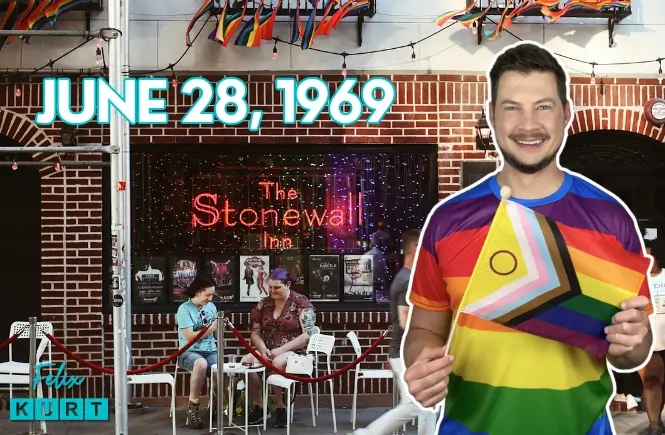
On June 28, 1969, police once again raided the Stonewall Inn, a gay bar in New York’s Greenwich Village. These raids were part of daily life for LGBTQ+ people back then. The police could arrest you for dancing with someone of the same gender, for wearing clothing that didn’t “match” your legal gender, or simply for existing in the wrong space at the wrong time.

But that night, something shifted. The patrons of Stonewall—many of whom were trans women, drag queens, homeless queer youth, and people of color—had had enough. They pushed back. Literally. They fought back against the police, sparking a series of protests that lasted for days.

🏳️‍🌈 Who were the heroes of Stonewall?

The people who lit the match at Stonewall weren’t mainstream activists. They were people who’d been marginalized even within the LGBTQ+ community:

  • Marsha P. Johnson, a Black trans activist and performer, often described herself as a “nobody, from Nowheresville.” She became a symbol of queer liberation.
  • Sylvia Rivera, a Latina trans woman, helped start what we now think of as queer intersectional activism.
  • Stormé DeLarverie, a butch lesbian, is rumored to have thrown the first punch. Whether that’s true or not, she was a central figure in that night—and in our history.

They didn’t just resist police violence. They started a revolution.

📖 How did Stonewall inspire the modern LGBTQ+ rights movement?

The uprising at Stonewall wasn’t just a local event. It marked the birth of the modern LGBTQ+ rights movement.

The following year, on June 28, 1970, thousands of people marched in New York, Chicago, and Los Angeles to commemorate the riots. That was the first Pride parade. From then on, Pride became not just a remembrance of Stonewall, but a statement: We are here. We exist. We deserve rights.

As a gay man in his 40s who came of age when queer stories were almost invisible, I feel this legacy in every page I write. Stonewall gave me the right to tell my truth—openly, freely, and with pride.

Why is Pride called Christopher Street Day in Germany?

Here in Germany (and in other parts of Europe), Pride is often called Christopher Street Day (CSD). Why? Because Stonewall Inn is located on Christopher Street in Manhattan. The name is a direct tribute to the brave people who fought back that night in 1969.

CSD celebrations in Germany began in the late 1970s and early 1980s, following the global rise of LGBTQ+ activism inspired by Stonewall. And while the parades are full of music, color, and fabulous outfits, they’re still deeply political. Every Pride flag waved is a nod to the people who made it possible.

✍️ What does Stonewall mean to me as a gay author?

As someone who was bullied all through my school years and told long before I understood what “gay” even meant that it was something to be ashamed of, the legacy of Stonewall is personal.

When I write queer characters in my YA fiction, I do it to honor the people who didn’t have representation. I do it for the kids like me—confused, scared, but full of love and life—who just needed to see themselves in a story.

Stonewall taught us that visibility is power. And today, every queer book, film, or character we put into the world is a step forward. But we have to keep going—because the fight is far from over.

We owe everything to those who stood up in that little bar on Christopher Street. Let’s make sure their courage lives on in every book we write, every parade we join, and every truth we speak.

My newsletter subscribers get instant access to my Secret VIP Giveaway Page, where I share free short stories and exclusive insights into my current projects. Sign up HERE

Stay bookish and fabulous,

Felix
Continue Reading

My Hopes and Dreams for the Future of LGBTQ+ Literature

gay-author-felix-kurt-blog-Hopes-Dreams-4-Future-of-LGBTQ-Literature

My Hopes and Dreams for the Future of LGBTQ+ Literature

Hey Booklovers!

Writing queer stories has always been close to my heart—but right now, it feels more vital than ever.

With so much backlash happening around queer lifestyles, identities, and narratives, I sometimes feel like we’re being dragged backward. Just when I thought society had started to move on from questioning who we love or how we express ourselves, here comes another wave of judgment and fear. And it breaks my heart.

Still, this is also what fuels me.

My writing—my characters, my plots, my heart projects—have become louder, prouder, and more purposeful. I wish they didn’t have to be. I wish society had already figured out that love is love, that stories about queer lives aren’t “niche” or “trendy” but necessary and universal. But until we get there, I’ll keep writing.

✍️ Why does LGBTQ+ literature still matter in 2026?

Because the fight for representation, dignity, and joy is far from over. When I write queer characters, I’m not just telling a story—I’m making a statement: We exist. We feel. We deserve happy endings too.

🌟 What do I hope for the future of LGBTQ+ literature?

I hope we reach a time where queer books are part of the mainstream—not because they’re edgy or controversial, but because they’re simply stories, as valid as any other. I want queer teens to see themselves on shelves without having to search the hidden corners of the bookstore.

And I dream of more joy. More diverse queer voices. More BIPOC, disabled, trans, and neurodivergent characters living big, bold, beautiful lives on the page.

❤️ Why I’ll never stop writing queer characters

As a gay man who grew up in the 1990s, I had no positive queer representation to hold onto. People told me who I was long before I even understood what it meant to be gay—and made it clear it was something shameful.

That’s why creating queer characters isn’t just my passion—it’s my world. It’s authentic, drawn from real-life scars and celebrations. Every novel I write is a love letter to the queer kid I once was—and to every reader still learning to love themselves.

My newsletter subscribers get instant access to my Secret VIP Giveaway Page, where I share free short stories and exclusive insights into my current projects. Sign up HERE

Stay bookish and fabulous,

Felix
Continue Reading

🏳️‍🌈 What the Pride Flag Means to Me 🏳️‍🌈

gay-author-felix-kurt-blog-What-the-Pride-Flag-Means-to-Me

🏳️‍🌈 What the Pride Flag Means to Me 🏳️‍🌈

Hey Booklovers!

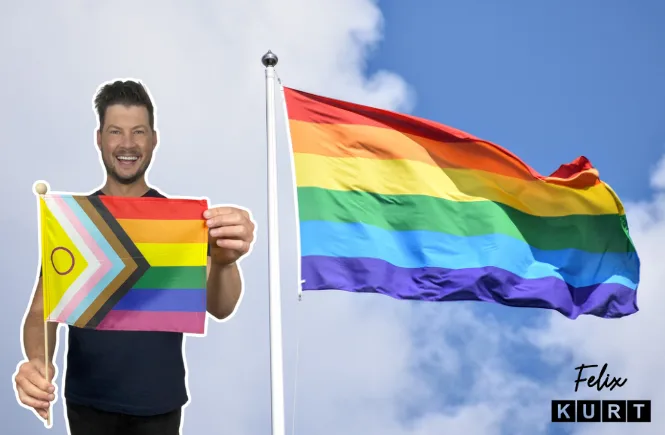
You’ve seen it hanging in windows, pinned to backpacks, printed on stickers, and fluttering proudly during June—but for me, the pride flag is so much more than a rainbow.

It’s a lifeline.
It’s a welcome sign.
And most importantly, it’s a reminder that I belong.

🏳️‍🌈 What Does the Pride Flag Mean to Me as a Gay Man?

For me, the pride flag is hope. It’s a signal that says:
“You are safe here. You’re accepted here. You don’t have to hide.”

Growing up in the 1990s, there were very few places where I felt truly seen. I was constantly bullied, misunderstood, and made to feel like who I was… was something to be ashamed of.
Now, when I walk past a café, a bookstore, or even a dentist’s office and see that flag in the window? It’s like a hug from the universe.

It might seem like a small thing, but trust me—when you’ve spent years scanning rooms for danger, a flag that says you’re safe means everything.

🏳️‍🌈 Why Are Visible Symbols of Inclusion So Important?

Because not everyone has the luxury of feeling safe by default.
For LGBTQ+ people—especially queer youth and trans individuals—public spaces can still be places of fear and uncertainty.

Seeing a pride flag says, without a word:
“We see you. We support you. You matter.”

That’s why visibility matters. It’s not about decoration—it’s about affirmation.

🏳️‍🌈 What Role Do Safe Spaces Play in LGBTQ+ Lives?

As a gay man, I can’t stress this enough: safe spaces save lives.

We don’t just want spaces where we can exist—we need spaces where we can exist without fear. Spaces where we can hold hands, speak openly, be emotional, be joyful, be ourselves—without constantly looking over our shoulders.

Safe spaces don’t have to be big or loud. Sometimes, they’re as simple as a pride flag in the window of a bookstore. Or a rainbow sticker at the entrance of a café. These quiet signals tell us:

“You’re welcome here, exactly as you are.”

And in a world that’s still fighting over whether or not we deserve that… those small signs become acts of resistance and acts of love.

🏳️‍🌈 How Does the Pride Flag Influence My Work as an Author?

As a gay person, creating queer characters is my world. I don’t just write them for the sake of representation—I write them because I am them. I know what it’s like to hide, to fear, to yearn for love and belonging. And I also know the beauty of being fully seen.

That’s why safe spaces—and symbols like the pride flag—often appear in my books. Whether it’s a character who finally finds a supportive teacher, or a coffee shop where two boys can go on a date without flinching—I’m always writing toward that feeling of safety and celebration.

Because that’s what I needed back then.
And I know so many readers need it now.

The pride flag isn’t just a rainbow—it’s a promise.
That you’re not alone. That you’re enough. That love wins.

So to every shop, school, library, or home that proudly flies that rainbow—thank you. You’re doing more than you know.

My newsletter subscribers get instant access to my Secret VIP Giveaway Page, where I share free short stories and exclusive insights into my current projects. Sign up HERE

Stay bookish and fabulous,

Felix
Continue Reading

Why True Queer Stories Matter – Now More Than Ever

gay-author-felix-kurt-blog-Why-True-Queer-Stories-Matter

Why True Queer Stories Matter – Now More Than Ever

Hey Booklovers!

There’s a phrase I keep hearing lately:
“It doesn’t matter if a story is true, as long as it’s told well.”

And honestly? I disagree.

In a time when deceitful political players and manipulative algorithms try to rewrite reality, the truth—raw, lived, sometimes messy—matters more than ever.

💬 Why do true stories hold more power today?

We live in a world flooded with content. AI can write a love story in seconds, clickbait headlines dominate our newsfeeds, and social media is full of polished narratives that hide the real emotions behind them.

But as a gay male author, I believe this even more strongly: real stories from lived experiences carry a heartbeat. They connect. They challenge. They heal.

When I write about queer characters, it’s not just fiction—it’s me on the page. The fear, the hope, the awkward crushes, the heartbreaks, the small victories of self-acceptance. You can’t fake that kind of truth.

🌈 Why is lived LGBTQ+ experience important in storytelling?

Because for decades—centuries even—we were written out. Or worse: written as villains, jokes, or tragedies.

When I was growing up in the 1990s, I couldn’t find a single book that made me feel seen. Nothing told me that who I was, was okay. That I could love another boy and not have the world fall apart.

That’s why I write the stories I do now—to fill the gaps that once made me feel invisible. True stories give us permission to exist, loudly and unapologetically.

🧠 What makes a story “true” even in fiction?

I don’t mean every book needs to be a memoir. But stories can be “true” in their emotional honesty, their roots in real experience, and their unfiltered perspective.

When a character’s journey mirrors your own struggles with identity or coming out, that’s truth. When their inner monologue captures what it feels like to hide, to hope, to love against all odds—that’s truth.

That’s why own voices in literature matter so much. And that’s why I will always advocate for more queer authors, more trans authors, more intersectional representation—not just writing about us, but written by us.

🧭 How can true stories shape the future?

Right now, the LGBTQ+ community is facing backlash in many parts of the world. Books are being banned. Identities questioned. Rights rolled back.

In the face of all this, true stories become a form of resistance.
They say: We’re here. We’ve always been here. And we’re not going anywhere.

👤 What does truth mean to me as a gay author?

To me, truth is found in the small details:

  • That first awkward dance with a crush.
  • The look in your parents’ eyes when you come out.
  • The laughter of found family at a Pride event.
  • The quiet, safe moment of finally feeling at home in your skin.

As someone who spent years masking who I was, truth is a luxury I no longer take for granted. It’s also my responsibility—to my readers, to myself, to the teen I once was who had no one telling him that love was okay.

If I could leave you with one thought, it would be this:
Truth matters—especially when it’s inconvenient. Especially when it’s challenged. Especially when it’s yours.

So tell your story. Write it down. Live it out loud. The world needs it.

My newsletter subscribers get instant access to my Secret VIP Giveaway Page, where I share free short stories and exclusive insights into my current projects. Sign up HERE

Stay bookish and fabulous,

Felix
Continue Reading

What Love Taught Me 🏳️‍🌈

gay-author-felix-kurt-blog-What-Love-Taught-Me

What Love Taught Me 🏳️‍🌈

Hey Booklovers!

Let’s talk about love. Not just the swoon-worthy kind we read about in books (though I’m all for that too!), but real, messy, beautiful, heartbreaking, hopeful love. As a gay man and a writer of LGBTQ+ fiction, love and relationships are at the heart of everything I create—but they’ve also been central to my own personal journey.

So today, I want to share some insights I’ve gathered through navigating love, heartbreak, and everything in between. Because even though I’m not currently in a relationship, I still believe in true love. I believe in soulmates. And I believe our stories—especially queer stories—deserve to be told authentically.

What Has Being Gay Taught Me About Love and Relationships?

Growing up, I didn’t have role models for queer love. There were no love stories that reflected my truth—no fairytales with two princes, no rom-coms with boys falling for boys. So I had to figure it out on my own.

And let me tell you: figuring out how to love when you’ve spent years being told that your love is “less than” is not easy. It takes time. It takes healing. It takes learning to believe you’re worthy of being loved exactly as you are.

Being gay has taught me that love, especially queer love, is radical. It’s brave. It’s powerful. And it’s ours.

Why Am I Still a Believer in Soulmates, Even Though I’m Single?

I may not be in a relationship right now, but that doesn’t mean I’ve given up on love. If anything, being single has made me reflect more deeply on the kind of love I want, and the kind I’m ready to give.

I believe in that deep, unshakable connection with someone who just gets you. Someone you don’t have to explain yourself to. I believe in real love, the kind that grows slowly and sticks around when things get hard. The kind you find once in a lifetime. And when I write love stories, that belief is what drives them.

Because even if I haven’t found “the one” yet, I know he’s out there somewhere, maybe lost in a bookstore aisle like me, looking for the same kind of magic.

How Do My Real-Life Experiences Shape the Queer Love Stories I Write?

As a gay male author, creating queer characters isn’t just something I do, it’s something I live. The emotions, the fears, the joy, the longing—it all comes from a real place. When I write about a first kiss, a breakup, a slow-burn romance, I’m not just imagining it. I’m remembering, reliving, and reshaping moments from my own life.

My experiences with love, both the highs and the heartbreaks, make my writing more personal, more honest. And hopefully, more relatable.

I don’t just write about queer love because I can. I write it because I have to. Because we deserve stories that are just as tender, just as dramatic, just as soul-stirring as any straight love story.

What Have I Learned About Love So Far?

Love doesn’t always look the way you expect it to.
And that’s okay. Sometimes it surprises you. Sometimes it teaches you something first.

Being single isn’t being incomplete.
It’s a chapter. A space to grow. And honestly? A great place to fall in love with yourself.

Communication is everything.
Whether it’s a short fling or a long-term relationship, being honest about what you feel (and need) changes everything.

You don’t have to settle.
This one took me a while. But now I know: real love isn’t about accepting less, it’s about waiting for more.

Why Do We Need More Queer Love Stories?

Because the world still needs to see them. Because young LGBTQ+ readers need to believe their love stories matter. Because older readers (like me) still crave the magic we never got growing up.

Queer love stories—like queer lives—are valid, vibrant, and full of hope. Whether they end in happily ever after or a lesson learned, they’re powerful. And I’ll keep writing them for as long as I can.

Whether you’re in a relationship, single, healing, searching, or just loving the journey—your story matters. And if you’re still waiting for your soulmate, like me, just know: love has no deadline.

My newsletter subscribers get instant access to my Secret VIP Giveaway Page, where I share free short stories and exclusive insights into my current projects. Sign up HERE

Stay bookish and fabulous,

Felix
Continue Reading

Important LGBTQ trailblazers

gay-author-felix-kurt-blog-trailblazers

Important LGBTQ trailblazers

Hey Booklovers!

Today, I want to talk about some of the incredible LGBTQ trailblazers who paved the way for all of us. As someone who came of age in the 1990s, I can tell you that representation was almost nonexistent back then. Queer characters in the media were rare, and when they did appear, they were often reduced to stereotypes or tragic figures.
Being openly different in those times took guts—real guts. And yet, there were people who stood up, spoke out, and made it a little easier for the rest of us to live authentically. Let’s celebrate some of these icons and explore why they’re so important.

Who Are Some LGBTQ Trailblazers We Should Celebrate?

Here are just a few names that come to mind when I think of trailblazers who helped shape the world for queer people:
1. Marsha P. Johnson and Sylvia Rivera
These trans women of color were pivotal figures in the Stonewall Riots of 1969. Marsha and Sylvia’s activism didn’t stop there—they dedicated their lives to fighting for LGBTQ+ rights, especially for the most marginalized in our community.

2. Harvey Milk
As one of the first openly gay elected officials in the United States, Harvey Milk broke barriers in the 1970s. His courage in running for office—and winning—helped put LGBTQ+ issues on the political map.

3. Audre Lorde
A Black lesbian poet and activist, Audre Lorde’s work explored themes of identity, feminism, and social justice. Her words still inspire and empower people to this day.

4. Ellen DeGeneres
Ellen made history in 1997 when she came out as gay—both in real life and as her TV character on Ellen. At a time when coming out in Hollywood could ruin careers, she took a huge risk and changed the landscape of media representation.

5. RuPaul Charles
RuPaul didn’t just bring drag into the mainstream—he turned it into a worldwide phenomenon. RuPaul’s Drag Race has created a platform for queer artistry and empowered countless LGBTQ+ individuals to embrace their fabulousness.

6. Larry Kramer
As the founder of ACT UP, Larry Kramer was a fierce advocate for people living with HIV/AIDS during the height of the epidemic. His activism forced the world to pay attention to the crisis when too many people wanted to look away.

Why Are These Trailblazers So Important?

These trailblazers didn’t just break barriers—they showed us what was possible. When I was growing up, seeing people like Ellen or RuPaul on TV was a revelation. It said, You’re not alone.

Beyond visibility, these figures fought for real change. From legal rights to social acceptance, their work laid the foundation for the freedoms we have today—and reminded us to keep fighting for what we don’t yet have.

What Was It Like Growing Up Without Queer Representation?

Let me take you back to the 1990s. If you were queer, you were likely hiding it. If you were lucky enough to find representation, it was often a side character in a story about someone else’s struggle.
That’s why these trailblazers were so impactful. Their bravery stood out in a world that didn’t want to see us. They made it clear that being different wasn’t just okay—it was something to be proud of.

How Can We Honor LGBTQ Trailblazers Today?

1. Learn Their Stories: Take the time to read about their lives and contributions. Books, documentaries, and podcasts are great places to start.
2. Support LGBTQ+ Causes: Many of the issues they fought for—like trans rights, racial justice, and healthcare equity—are still relevant today.
3. Be Visible: Whether you’re queer or an ally, being open and vocal about your support helps continue their legacy.

Final Thoughts

LGBTQ trailblazers didn’t just open doors—they kicked them down. They made it possible for people like me to write unapologetically queer stories and for the next generation to grow up with a little more hope.
Who are the LGBTQ trailblazers that inspire you? Let me know—I’d love to hear about them!

My newsletter subscribers get instant access to my Secret VIP Giveaway Page, where I share free short stories and exclusive insights into my current projects. Sign up HERE

Stay bookish and fabulous,

Felix
Continue Reading

Let’s Create an Open, Loving and Accepting Society

Let’s Create an Open, Loving and Accepting Society

Today, I want to chat about something that’s been fueling my creative fire lately: crafting a world where love knows no bounds. Strap in, because we’re diving deep into why I write fiction and the bigger mission behind it all.

What would a world where love knows no bounds look like?

Picture this: a world where who you love isn’t a headline or a point of contention. It’s just… love. Simple as that. No labels, no judgment—just pure, unadulterated love. Sounds pretty amazing, right? Well, that’s the world I’m striving to create, one story at a time.

How can storytelling shape hearts and minds?

You see, as a fiction writer, I believe in the power of storytelling to shape hearts and minds. It’s not just about spinning a good yarn or crafting compelling characters (though I do love me some juicy plot twists and complex protagonists). It’s about weaving a tapestry of empathy, understanding, and acceptance.

What themes run through your novels?

In my novels, whether it’s a heart-pounding romance, a gripping mystery, or a fantastical adventure, there’s always one underlying theme: love in all its forms. And not just romantic love, mind you—though there’s plenty of that to go around. I’m talking about the love between friends, the love of family, the love for oneself. Because love is love, no matter how you slice it.

Why is normalizing love in all forms important in fiction?

But here’s the kicker: my stories aren’t just about showcasing love. They’re about normalizing it. In a world where LGBTQ+ rights are still up for debate and discrimination runs rampant, it’s more important than ever to shine a spotlight on love in all its beautiful, messy, glorious forms.

How does writing fiction help to promote acceptance and understanding?

You see, every time I sit down at my laptop and let my fingers dance across the keyboard, I’m not just crafting characters and plotlines. I’m building bridges. I’m tearing down walls. I’m constructing a world where acceptance and understanding reign supreme.

What challenges do writers face when crafting stories of love and acceptance?

And you know what? It’s not always easy. There are days when the words don’t flow, when doubt creeps in, when the world outside feels dark and unyielding. But then I remember why I do what I do. I remember the impact a single story can have, the way it can touch a reader’s heart and change their perspective forever.

Why is love the greatest story ever told?

So, here’s to building a world of love—one page, one chapter, one story at a time. Because in the end, love will always be the greatest story ever told. And I’m just grateful to play a small part in sharing it with the world.

My newsletter subscribers get instant access to my Secret VIP Giveaway Page, where I share free short stories and exclusive insights into my current projects. Sign up HERE

Stay bookish and fabulous,

Felix
Continue Reading

The Power of Visibility: Sharing Personal Stories for Social Change

gay-author-felix-kurt-blog-visibility

The Power of Visibility: Sharing Personal Stories for Social Change

Hey Booklovers!

Have you ever wondered why personal stories matter so much in shaping the world? Or why some voices seem louder than others in the fight for change? As a gay male author, I’ve thought about these questions countless times, and the answer always comes back to visibility. So today, I want to share why being visible—being my authentic self—matters so much, not just to me, but to society.

Why is being visible so important?

For a long time, LGBTQ+ stories were hidden or erased altogether. I grew up feeling like I had to hide parts of myself because there weren’t enough examples of people like me living openly and thriving. That silence can feel like an endless void, but visibility has the power to fill it with color, hope, and connection.
By showing up as my authentic self in my writing and daily life, I want to send a message: You are not alone. When we share our truths, we create space for others to feel seen, heard, and valued.

How can stories spark change?

Storytelling isn’t just about entertainment; it’s about empathy. When people read about someone’s life experiences—especially those different from their own—it breaks down barriers of misunderstanding.
When I write as a gay man, I’m not just telling my story. I’m weaving in the complexities of love, identity, joy, and struggle that many people—gay or straight—can connect with. And when someone connects with my story, it has the potential to shift their perspective. That’s how change begins.

Is it scary to be authentic in a world that might judge you?

Oh, absolutely! Being authentic isn’t always easy. Some days, it feels like standing in a spotlight when you’d rather hide in the shadows. But the truth is, living authentically is a kind of quiet revolution. Every time I embrace who I am, unapologetically, I’m challenging a society that has often told me to shrink myself.
The world needs more people who are willing to be visible. Not just for their own sake, but for everyone who’s still finding their courage to do the same.

How can YOU help amplify these stories?

You don’t have to be a writer like me to make a difference. You can read, share, and celebrate stories that challenge norms and push boundaries. When you read books by LGBTQ+ authors or share content from marginalized voices, you’re helping to amplify our visibility.
So ask yourself: What stories are you supporting? Whose voices are you helping to uplift?
In the end, sharing personal stories is about more than one person’s experience—it’s about building a more compassionate, inclusive world. My journey as a gay male author is just one thread in this vibrant tapestry, but it’s one I’m proud to hold.

What’s next?

I’ll keep writing, keep showing up, and keep being visible. And I hope you’ll keep reading, keep asking questions, and keep opening your heart to the power of personal stories.

My newsletter subscribers get instant access to my Secret VIP Giveaway Page, where I share free short stories and exclusive insights into my current projects. Sign up HERE

Stay bookish and fabulous,

Felix

Continue Reading