Madeira Island Inspired a Gay Writer

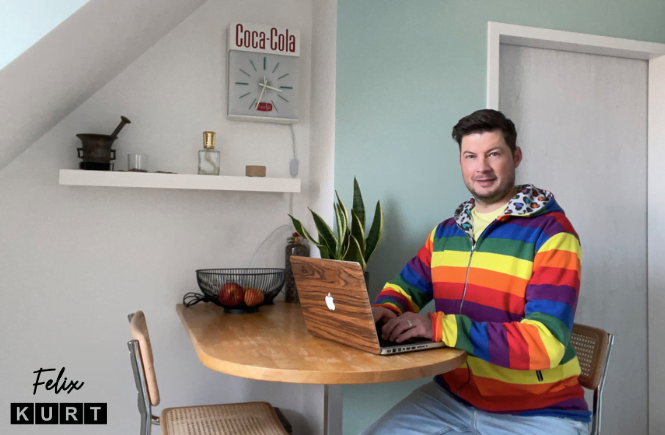
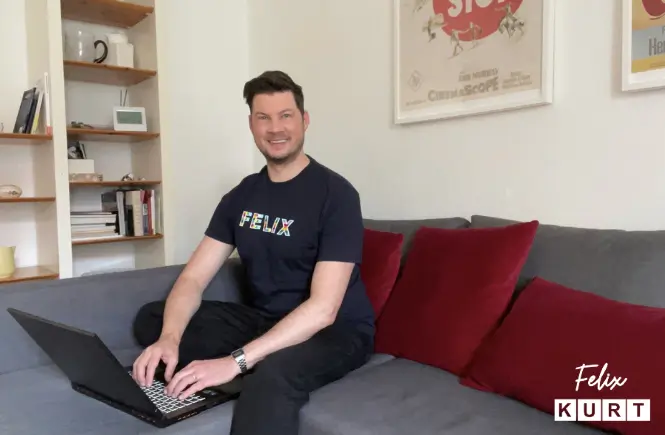
Photo of gay LGBTQ+ queer author Felix Kurt sitting on a sofa with his laptop writing for the blog "Madeira Island Inspired A Gay Writer"

Madeira Island Inspired a Gay Writer

Hey Booklovers!

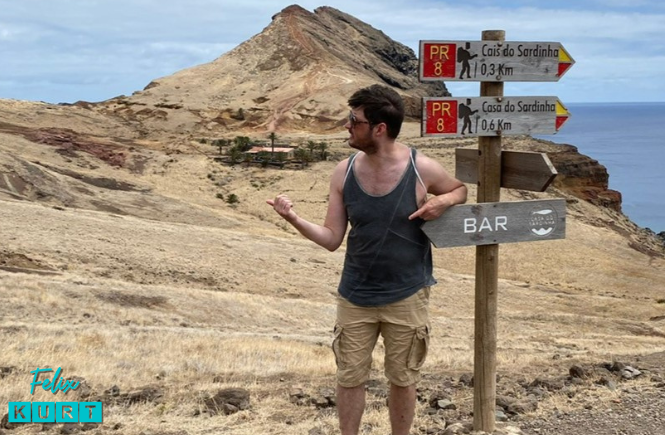
I love to travel, and one of the most striking locations I’ve been to is the island of Madeira. Madeira island is located in the North Atlantic Ocean, southwest of mainland Portugal and about 400 kilometers (250 miles) north of the Canary Islands. It is part of Portugal. The island’s volcanic origins have created a rugged terrain with steep, forested slopes, deep valleys, and stunning cliffs that drop into the Atlantic Ocean. Madeira’s highest peak is Pico Ruivo, which stands at 1,862 meters (6,109 feet) above sea level.

Nature on Madeira Island is very fascinating. Down by the sea, the weather is hot and dry, but the island is very green with a lot of plants. The reason for this is that the island has high hills where the clouds lose the water they carry when they pass through the thick trees. This water is led down to sea level via man-made irrigation channels that crisscross the hillsides.

My friends and I drove up to one of the hilltops and walked into a beautiful meadow. Up there, the clouds glide over the grass of the hills and you can walk through them. It feels surreal. Like anything could happen. While I was standing there on the hill in the humid air, I thought to myself that I wouldn’t be surprised if a magical creature would suddenly appear.

When we got back to our lovely rented farmhouse (see the photo above), I was eager to put this magical experience into words. The idea of a queer magical creature appearing in front of me popped up in my head. Nothing would be cooler than a fairy godmother granting you one wish, right? As you might know, I love unicorns. The reason might be that I’m a Sagittarius. A Sagittarius is part man, part horse. So for me, the perfect magical creature is a queer unicorn that’s also a hot man. While writing down my first ideas, I listened to one of my favorite songs of all time: “One Night Only” by Beyoncé from the Dreamgirls soundtrack. In the finished story, the Fabulous Fairy Godperson grants the lonely hiker Jaden a wish that lasts for one night only.

“You get one night of perfection. You may have everything you want. But it will only last until dawn.”

The song by Beyoncé always reminds me of one of my favorite movies: Studio 54. I would give anything to be able to spend a night at Studio 54. So naturally, this is the location Jaden chooses for his one night of perfect love.

I’m currently working on the two sequels to SECOND CHANCE WITH TONY, and I feel I never have enough time to dive deeply into the story. While writing short stories I never get these destructive thoughts. Writing short stories feels like a quick win, because I can finish them quicker and still feel I’ve told a complete tale. Now that I think about it, exploring the idea of a whole novel featuring the Fabulous Fairy Godperson would be fun…

You can read the finished short story ONE NIGHT ONLY on my Secret VIP Giveaway Page 😊
Just sign up for my free newsletter HERE

Stay bookish and fabulous,

Felix

Continue Reading

My Motivation As A Gay Writer

Photo of gay LGBTQ+ queer author Felix Kurt sitting on a sofa with his laptop writing for the blog "My Motivation As A Gay Writer"

Hey Booklovers!

Growing up, there weren’t any characters who felt or loved like me in the books I devoured. And even though things are getting better, there’s still work to be done. That’s where I step in.

Writing gay fiction novels started as a hobby, but it developed into my calling. All readers yearn for tales filled with love, identity, and magical storytelling. As a queer person living in a heteronormative world, a lot of times I don’t feel seen. My motivation as a gay writer is that I literally want to get my word out. I thoroughly believe that representation of queer life in literature can be a building block of an open society. As a reader I’m always drawn to stories that mirror my own experiences as a gay man.

For me, writing gay fiction isn’t just about crafting awesome characters and gripping plots (although I gotta admit, I’m all about those plot twists and heart-fluttering romances). It goes deeper than that. It’s about representation. It’s about making sure LGBTQ+ folks see themselves in the stories they read.

Through my narratives, I aim to create a space where queer voices can be loud and proud. It’s about breaking stereotypes, smashing taboos, and showing the world that love comes in all shapes and sizes.

Every time I sit down to write, I’m not just spinning a yarn. I’m shining a light on the beauty and complexity of the LGBTQ+ journey. I’m sharing the struggles, victories, and everyday moments that make us who we are.

Sure, it’s not always smooth sailing. There are days when the words won’t flow, when doubt creeps in, and when the world feels like it’s not on our side. But then I remember why I do what I do. I remember how a single story can touch someone’s heart and change their outlook forever.

So, here’s to writing gay fiction with a purpose. Here’s to celebrating queer voices, spreading love, and making sure everyone feels seen and heard in the literary world. Because love will always be the ultimate story, and I’m just grateful to be a part of sharing it with the world.

Do you want free short stories and a deeper glimpse into my creative process? Then sign up for my free newsletter HERE and get instant access to my Secret VIP Giveaway Page 😊

Stay bookish and fabulous,

Felix

Continue Reading

My Coming Out Story And Why It Is Important To Live Openly 🏳️‍🌈

My Coming Out Story And Why It Is Important To Live Openly 🏳️‍🌈

Hey Booklovers!

Today I get very personal and tell you my coming out story. I was born in Bonn, Germany in 1978, a medium-sized town that was the capital of West Germany at the time. My parents had me, their only child when they were both 35. Our household was middle-class and fairly liberal. My father owned a small public relations agency, and my mother worked as a foreign language assistant for a United Nations press representative. They both valued hard work and keeping a low profile.

When I was 17, I came home from a visit to Berlin with an eyebrow piercing. My father was furious and refused to speak to me during dinner. Eventually, he exclaimed, “By doing this, you’re putting yourself outside of society! People will think less of you.” Little did he know what would happen just two years later.

Throughout my childhood, I was different from the other boys. My interests didn’t align with theirs. I loved playing with Lego and Playmobil, reading, and cooking. Most of my friends were girls, and I was always intimidated by the loud and rough boys. I had no interest in sports. I dressed up in costumes, created stories for my hand puppet theatre, and desperately wanted a baby doll. It took years of persistent asking before my parents finally gave me one for my birthday. My father, born in 1943, didn’t think it was appropriate for a boy to play with dolls. It was a soft pink baby doll with stunning blue eyes that came with a pink bathtub, and I was overjoyed.

From an early age, my parents subtly hinted that they wanted me to be like other boys. At 19, I gathered the courage to visit a queer youth center in Cologne, which still exists today. There, I met a boy my age at the bar. I fell hard for him. He was a DJ and an artist and invited me to a queer party where he was DJing. Up in the DJ booth, he played all my favorite songs. After the party, I drove him home, and we watched the sunrise over the Rhine River. That’s when I had my first gay kiss. It was unlike anything I had ever felt before.

Since I was using my mom’s car, I had to return it home. We walked into my parents’ house, and I introduced him to my mom, saying, “This is Tom. We’re super tired and going to sleep.” After Tom left the next day, my mother asked who he was, and I came out to her. Both of my parents struggled to accept that I was gay. At that time, there was very little gay representation in German media. They didn’t know any gay people and the media portrayed gay individuals as effeminate, sex-crazed, or as comedic relief.

This was in 1999, just a few years after the abolition of Paragraph 175, which criminalized sexual relations between men. I was furious at my parents for their shocked reaction, and it took a long time for both sides to come to terms with my sexuality. I later understood that my parents feared what they didn’t know. They worried that being gay would hinder my career prospects and make me a target of judgment. Progress was slow, but it greatly helped that one of my mother’s colleagues was gay. He answered her questions when I wouldn’t. Coming out to my parents and friends changed everything. I felt like I could breathe for the first time in my life. My parents saw how happy I was and treated my long-term boyfriends like a second son. They also educated those around them.

I am a testament to the idea that it gets better. Even though people now have more access to LGBTQ+ content, visibility remains crucial. That’s why I strive to be an advocate for an open society. I live openly and share my life on social media, despite the inevitable backlash.

My newsletter subscribers get instant access to my Secret VIP Giveaway Page, where I share free short stories and exclusive insights into my current projects. Sign up HERE

Stay bookish and fabulous,

Felix
Continue Reading

Why the 1950s inspire me as a gay writer who grew up in the 1990s

Photo of gay LGBTQ+ queer author Felix Kurt sitting on a riverbank writing for the blog "Why the 1950s inspire me as a gay writer who grew up in the 1990s"

Why the 1950s inspire me as a gay writer who grew up in the 1990s

Hey Booklovers,

When I was growing up, my parents had a flea market stall where they sold antiques my grandma had brought with her when she left East Germany. My family raised funds for her this way because her pension was very small. I learned a lot about antiques from different eras and how to distinguish them. My favorite period was the 1950s.
I was bullied heavily in school and the present moment felt horrible to me. In my imagination, I fled into the 1950s.
My mom was a big Elvis fan, and my dad had a big record collection. I started collecting decorative objects, furniture, and records from the 50s. The pastel colors and sleek forms spoke to me. I also loved the cheesy movies that showed a perfect world of well-dressed people attending cocktail parties.
My first novel “Second Chance With Tony” is heavily influenced by 1950s rural North America.
Lately, I’ve come to realize that the parallels between the 1990s I grew up in and the 1950s I dreamed of are both surprising and illuminating. The 1950s were a time of innovation, marked by the dawn of the Space Age, the rise of television, and the birth of the consumer culture. Similarly, the 1990s saw the explosion of the internet, the proliferation of digital technology, and the beginnings of globalization. Despite the temporal gap, both decades were characterized by a fervent spirit of innovation and progress. Design played a central role in shaping the aesthetic and ethos of both eras. In the 1950s, sleek lines, bold colors, and futuristic motifs dominated the design landscape, mirroring the era’s optimism about the possibilities of technology and modernity. In the 1990s, a similar fascination with sleek, minimalist design emerged, fueled by the rise of companies like Apple and the ethos of the burgeoning tech industry.
Beneath the shiny surface of progress and prosperity lay the shadow of danger. War loomed large over both decades. In the 1950s, the Cold War cast a long shadow, as the world teetered on the brink of nuclear annihilation. Similarly, the 1990s were marked by conflicts in the Balkans, the Gulf War, and the ongoing threat of terrorism.
As a gay writer, I can’t help but see parallels between the social and cultural repression of the 1950s and the struggles faced by LGBTQ+ individuals in the 1990s. In both eras, queer identities were marginalized and stigmatized, forced into the shadows by societal norms and legal restrictions. Yet, just as the 1950s laid the groundwork for the cultural revolutions of the 1960s and beyond, the 1990s saw the beginnings of a seismic shift in attitudes towards LGBTQ+ rights and visibility.
Innovation, design, danger – these themes resonate across the decades, linking the seemingly unrelated worlds of the 1950s and the 1990s. As a gay writer, I found inspiration in the 1950s, but I’m very glad not to have lived back then, when being gay was a crime and heavily penalized. I’m also glad to have left my terrible adolescence behind me. Now that we queer people in the Western countries have the same rights as everyone else, I find hope for a more inclusive and equitable future. These rights are very new and might be taken away again if we are not vigilant. I try to contribute to my vision of an open and accepting society by the stories I write and by living openly and showing my face here on social media. Remember, no matter who you are, you are loved.

Stay bookish and fabulous,
Felix
Continue Reading

Writing gay fiction novels with a purpose

Photo of gay LGBTQ+ queer author Felix Kurt sitting on a riverbank writing for the blog "Writing gay fiction novels with purpose"

Writing gay fiction novels with a purpose

Hey Booklovers,

I’ll self-publish my first novel very soon. As a gay male author, I am often asked about my motivation behind writing a young adult (YA) coming out story. For me, the decision to delve into this genre and topic stems from a deeply personal place – a place of authenticity, empathy, and the desire to give voice to the experiences of LGBTQ+ youth.

Growing up, I struggled with my own identity and the fear of societal judgment. Because I was different from my peers, I was constantly bullied. My journey to self-acceptance was tough. I felt completely alone. I didn’t know any other queer people and there was no queer representation in the media. Thankfully, this has changed.

My motivation extends beyond simple storytelling, it’s about representation and empowerment. LGBTQ+ youth deserve to see themselves reflected in literature, to know that they are not alone in their experiences, and to feel validated in their identities. Through my writing, I hope to provide a mirror for them to see their struggles, triumphs, and the beauty of embracing who they are.
I strive to take my readers on a fun journey while not leaving out the difficult moments that a queer person who is coming of age encounters. I aim to reflect the emotional turbulence and resilience that many LGBTQ+ individuals have to face during this pivotal moment in their lives.

I firmly believe that literature has the power to create understanding and compassion. By sharing authentic narratives of coming out, I hope to cultivate empathy among readers, regardless of their sexual orientation. Through empathy, we can bridge divides, challenge stereotypes, and build a more inclusive society!
Stories have the potential to spark meaningful conversations and offer guidance to both LGBTQ+ individuals and their allies.

Writing a YA coming out story allows me to explore themes of love, friendship, and self-discovery trough the gripping narrative of a love story with mystery elements. My first book is also a story of first love and the earth-shattering feelings that come with it.

I’m currently writing more stories. All of them share the same important aspects: my own experiences (#ownvoices), my deeply personal journey of self-discovery, a commitment to representation, and a desire to foster empathy and understanding. Through literature, we have the power to uplift, inspire, and create change – one story at a time! 🏳️‍🌈😊✍️

Stay bookish and fabulous,
Felix
Continue Reading